CAROL SODERLUND

Carol began dyeing fabric in 1988 when she couldn't find the colors she needed to bring the "vision" of a quilt to life. With her hand-dyed fabric she was able to create the quilt, which subsequently won Best of Show at the 1989 International Quilt Festival in Houston, Texas. Since then, dyeing and surface design processes have become an enduring interest for her. As a quilt artist, Carol is known for her use of color to create transparent, luminous, and dimensional effects of great subtlety. Her work incorporates hand-dyed, stamped, stenciled, and discharged fabric in combination with commercial fabrics and many decorative threads. She continues to make quilts, and exhibits them nationally and internationally. Carol is in demand as a teacher of color, fabric dyeing, and machine quilting techniques. She lives in Geneva, New York with her husband, two sons, three boats, and a fabric stash.

Carol's web site: www.carolsoderlund.com

Class review by Janet Steadman of Washington State:
"Everything about Carol Soderlund's Color Mixing for Dyers is positive. I can't think of a single thing that wasn't great. Carol is an excellent instructor. Every aspect of the class was well thought out and presented in a very professional manner. The workshop includes color theory as well as hands-on dyeing experience. The end product of the class is a great book of over 1000 color swatches and the knowledge of how to reproduce the 1000 colors on your own. I would encourage anyone who is interested in dyeing fabric to take this class."

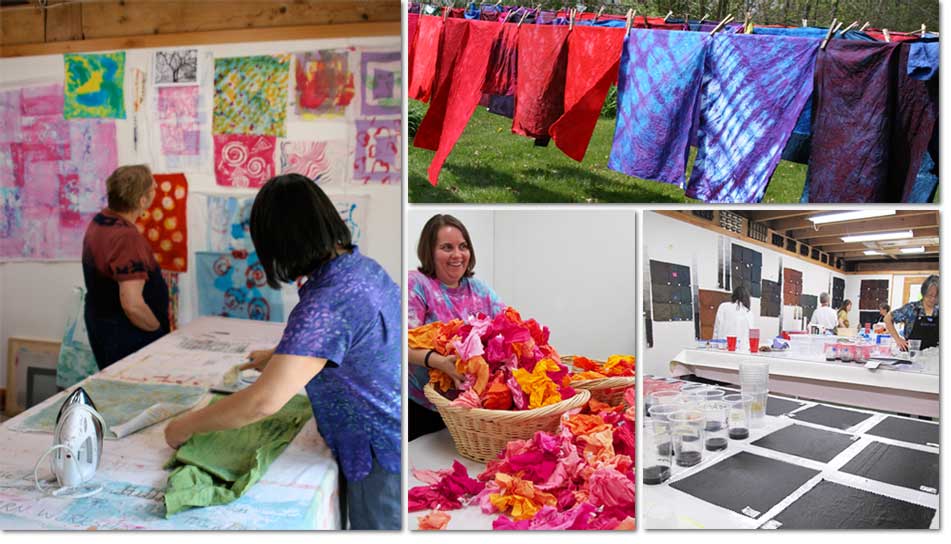
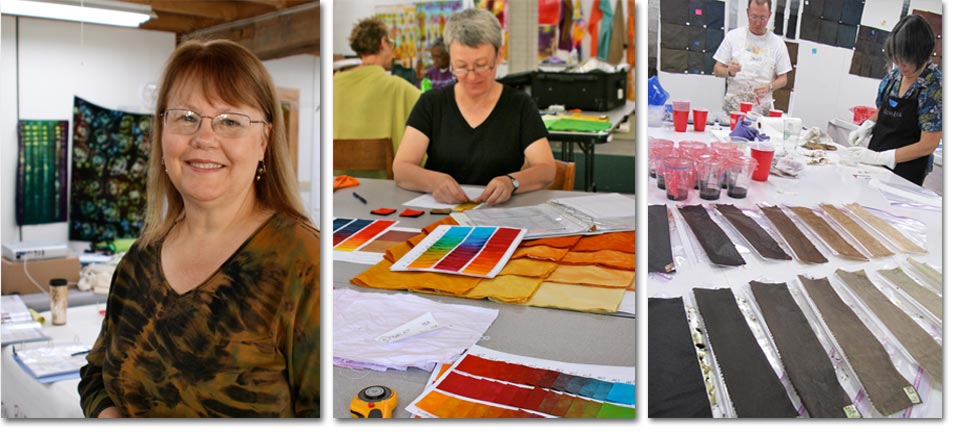
Carol Soderlund and examples of work created in her classes.

Color Mixing for Dyers: Part II | Hand Dyed Fabrics | Carol Soderlund hand dyed fabric classCOLOR MIXING FOR DYERS: PART II

• Dates: October 6-10, 2008
• Prerequisite: Color Mixing for Dyers: Part I
• Zig Zag Sewing Machine: No
• Tuition & Meal Plan: $730 (Early: if paid in full by March 1, 2008)
• Tuition & Meal Plan: $750 (Regular: if paid in full by June 1, 2008)
• Materials Fee: $65
• Dye Facility Usage Fee: $25
> Accommodations and meal information

Register register


DESCRIPTION
This class will expand the possibilities of creating color and texture with Procion MX Dyes. Building on information from the first Color Mixing course, and using the sample books we created to choose color, we will study dye techniques in depth. As time allows, we may sample some new primary combos as well!

Explorations will include
• controlling color and value with thickened dyes using a variety of techniques such as stamping, screening, monoprinting and dye painting
• understanding variables affecting color and patterning in low water immersion techniques: manipulating time, temperature, salt, soda ash, and urea
• layering with color: focusing on choosing color sequences for overdyeing with mechanical and water soluble resists
• controlling color and value when overdyeing so that previous design work is not obliterated

Each day will build on the previous day’s work, so that by the end of the week, participants will have a series of fabric samples both small and large and an organized notebook illustrating how variables affect dye outcomes.
• Please note: this class is also perfect for people who dye yarn...knitters, weavers!

Hand dyed fabric examples

SUPPLY LIST (Please label your own supplies)
OFFICE SUPPLIES:
• 3 ring binder, 1” thick (may add to binders from Part I if desired)
• 50 CLEAR top-loading page protectors (buy in bulk at office supply store)
• 1 package Avery self-adhesive index tabs with colored tabs, 25 in package
• 2 rolls (25 yards each) Scotch Double Coated Tape with 1” core in yellow box such as Staples item# 130500 @ $4.29 or Office Max # 09001741 @ $3.49
• 1 desktop tape dispenser with 1” core (available at Staples for around $2) This makes life MUCH easier!
• 7 business-size (long white) envelopes
• stapler plus extra staples, and staple remover if you have one
• rubber bands (a dozen or so)
• Sharpie (permanent marker)
• highlighter
• calculator
• notebook, pen, pencil

GENERAL SUPPLIES:
• YOUR DYE SAMPLE BOOK and notebook from Color Mixing I
• small pair scissors for fabric, and one for paper/plastic
• rotary cutter - bring a fresh straight blade as you will cut through numerous layers at once. The large (60 mm) cutters work the best for this.
• mat - 11” x 17” if you are flying, or larger if you are driving
optional addition: 12” x 12” rotating mat (previous students have loved this!)
• quilter’s plexiglas ruler (6” x 12” and 6” x 24” are suggested sizes)
• optional: June Tailor Shape Cut ruler - the large size, from JoAnns Fabric and Crafts Store
This is particularly good for weavers and those inexperienced in rotary cutting. Sign up for JoAnn’s newsletters and they will send you 40% off coupons.
• iron and ironing pad, or old terry towel
• adhesive lint roller from the dollar store
optional: samples of your dyed fabric and/or photos of your work

FABRIC:
• 10 yards or more fabric for further dye explorations (PFD--prepared for dyeing-- fabric recommended.) Of the 10 yards, some may be silk, tencel, or rayon if you wish.
Note to weavers: It is fine if you would like to bring some skeined yarns for dyeing: cotton, linen, rayon, tencel, or silk.
• previously dyed fabric for overdyeing

DYE PAINTING, PRINTING, AND IMMERSION SUPPLIES: (Label Your Own Supplies!!)
• your measuring tools from Part I
• one set measuring teaspoons
• one set measuring cups
• 1 large strong plastic spoon or spatula, at least 12” long
• plastic bags: one box one gallon ziploc bags, 6 kitchen garbage bags, 6 sandwich bags
• 3-4 assorted foam brushes
• 2-3 sponge rollers from the hardware store, around 4-6” size
• 2 plastic paint trays to use with rollers, or Styrofoam meat trays from the grocery store, or foam plates
• 1 chunky foam stamp, or other favorite stamp for fabric painting
• flat objects for rubbings: ideas: plastic fencing, dish drainers, flat grids, low relief plastic, metal, or rubber objects such as tile spacers, rubber washers, etc.
• notched adhesive spreaders, combs, etc.
• masking tape
• three 8 oz. squirt bottles
• dye mask
• rubber gloves, both the loose dishwashing kind that extend up the wrist, and the close-fitting latex kind

If you are driving, the following items are needed the first day:
• one 5 gallon bucket
• one 2-liter soda pop bottle, one 1 liter soda pop bottle, and one gallon milk jug, all with caps

If you are flying, the following items will NOT be used the first day, any that will not fit in luggage could be purchased after class begins at a grocery store:
• 10 plastic cups, 16 oz size, and 10 plastic picnic spoons
• plastic containers with lids, 4 or more cottage cheese or deli size
• 5 Ziploc Take-Along containers, 4 cup size
• 1 roll paper towels
• 2 Rubbermaid 9 x 12 plastic containers (like a lasagne pan) OR Rubbermaid/Sterilite plastic shoeboxes

MATERIALS FEE PROVIDES:
Handouts
• All dyes needed, pre-measured in squirt bottles
• Auxiliary Chemicals such as soda ash, urea, print paste, synthrapol
• Tools for Student use
• PFD cotton fabric for the sample book

Carol will bring a variety of other equipment to use in class. A limited amount of extra PFD fabric will be available for purchase in class.

> Close this window to return to the main site or click on a link below | Questions? > Email


Nancy Crow | Home | Tours | Barn Workshops | New Book | Gallery | Bio | Email
© 2002-2008 Nancy Crow, llc | Site designed by Nathaniel Stitzlein | Art Grange Studios
Notice: All images & materials on this site are protected by copyright law and may not be reproduced in whole or in part without the express written permission of Nancy Crow or the artist.

Carol Soderlund | Color Mixing for Dyers | Hand dyed Fabric Dyeing classes

> Click here to see an image gallery of the Crow Timber Frame Barn

new class
Crow Timber Frame Barn Workshops | Fall 2008